Please excuse a bit of Virgo navel-gazing! After surgery, I joked about my frustration that I couldn’t just experience my physical pain, I had to abstract it into metapain. Then I realized my labor had been more of a metalabor, my son’s NICU stay a metahospitalization. There was no metadeath or metagrief. But now, there is metablogging.

I’m back home after a week away, and trying to get back into a routine. I want to post something, but I’m conflicted, as always, about whether to post something rawer about the fresh things I’m working through (there’s no end of things for me to work through!), or whether to dredge something up that shows where I’ve been.

Read the rest of this entry »

In the spring, someone told me that it’s helpful to come up with a descriptive concept to represent the grief experience. Many people say that grief is “like being rocked by waves”. I half-heartedly accepted the wave theory (the emotions of grief do come in unexpected, overwhelming bouts), but it felt a little off. Eventually my own description took shape.

It was as though I had been newly blinded, and placed alone in an unfamiliar room. I couldn’t see what was before my face. With each movement there was a risk of unexpectedly stubbing my toe on the furniture, or worse: knocking over boxes, banging my head on the chandelier, stepping on shattered glass. Occasionally I found a safe and quiet space to rest. The work of constructing a mental map began. But the map was unreliable, based on fearful memories and incomplete knowledge. And it was unrecorded, the lines held imprecisely by a tired mind.

During those days, others often worried that I would become bored. But I’d never been busier, had never worked harder, was never so exhausted. I was dodging table legs and feeling my way along the side-walls. I was building my map. Constantly bruised and cut, recovering from various wounds while sustaining new ones. That was the work of grief.

With time my map improved, and I could even rearrange things. Put a big couch in the center, swept up most of the glass, reminded myself to keep away from that gross sticky patch near the corner. I didn’t want to be in that room, but it had become my home.

Now I have that safe place to call my own, but I’ve realized that the entire house is unfamiliar. There are many more rooms to explore and make safe. Some day I’ll need to go outside to make sure the structure seems stable. But not yet; I still haven’t cleared a path to the door.
In medical settings, people generally assume that I’m very young and that I have little personal life experience. Maybe it’s my baby face. Maybe it’s the fact that medical training is so time-consuming that often doctors don’t pursue a personal life outside of their career until they are older. Maybe it’s the fact that we devalue individual experiences, knowing that “an n of one” should not drive decisions. Or, maybe it’s the fact that our work conditions are so frequently inhumane, and the work itself is often dehumanizing (of course, those characteristics aren’t unique to medicine).

At any rate, my significant personal life has always come as a welcome surprise to patients and a bit of a curiosity to older physicians. That my personal life could include hardship and sadness — the possibility doesn’t cross anyone’s mind. I don’t intend to shock people, but my experience is shocking. Keeping quiet about the experience makes me feel sad and stifled, as though my atypical hardship were shameful, when nothing could be further from the truth. Medicine failed my child and me, not the other way around.

I’m still not sure where my story belongs. Or where I belong. So I’m having lots of conversations like the following.

Kindly Hospice Attending (initiating an educational conversation with me while he completed a death note for a patient who had just passed): “How do you diagnose death?”

Good Resident Kaitlyn: “Well, it depends on the case… Read the rest of this entry »

Letter from Trayvon Martin’s mother to Michael Brown’s mother. “Neither of their lives shall be in vain.”

Patients don’t read the textbook ~ Medical truism

By the end of my second year of medical school, I ceased to be surprised by the ways that human biology can go awry. Instead, having studied the seemingly endless complications that can emerge over the course of human life, I marveled at how often it all goes smoothly.

After countless hours spent attempting to understand (or, at least, memorize) humanity’s various physical ailments, I didn’t expect my own life to proceed without bodily complication. Like most medical students, I anxiously observed a parallel between the diseases I was studying and my own experiences, wondering whether an involuntary twitch of my finger might signal some catastrophic underlying disorder.

I had read the textbooks – zealously, multiple times.

Read the rest of this entry »

When I decided to start a blog two weeks ago, I was just coming out of the darkest period of grief (for me, this lasted from about 3-5 months after my son died). That doesn’t mean the grief went away. It never will – and I wouldn’t want it to. I looked forward to combing through all of my writing from the previous months, doing a bit of editing and choosing some things to share. As a way to remember my son and how much I love him. To wallow a bit. To pick things up and put them back down.

Just as I began to do this, though, an entirely new thing happened: I became terrified.

Read the rest of this entry »

I feel how weak and fruitless must be any words of mine which should attempt to beguile you from the grief of a loss so overwhelming. ~ Abraham Lincoln to Mrs. Bixby, who lost 5 sons in the Civil War

Often people avoid talking to those who are suffering a loss because they can’t think of a way to make the other person magically feel all better. I have been one of those people! However, now I’ve learned that the silence can be a burden, and that following the impulse to make the sufferer feel better is often counterproductive.

Saying nothing about the loss? Ignoring the gorilla in the room is generally awkward and isolating, at best. At worst, the conversation may veer straight into the gorilla, leaving everyone bruised and battered.

And trying to talk someone out of their grief? Not helpful at all, it turns out!

For me, simple statements of acknowledgement and validation have been the most reliable balm during a time of tragedy.

Read the rest of this entry »

During the first months after my baby son’s death, I often felt that I was on the verge of sublimating. I was bound to explode into a gaseous cloud of disconnected molecules that would disperse and leave no trace. There was an allover burning sensation, and a sense that I needed to intensely focus if I wanted to keep the various pieces of myself together, like Peter Pan pinning his shadow to his shoe. The effort to remain whole was laborious and ultimately impossible. The red-tinged cloud of my heart frequently drifted out the door while my vaguely floating skin maintained appearances by hovering above the couch.

Read the rest of this entry »

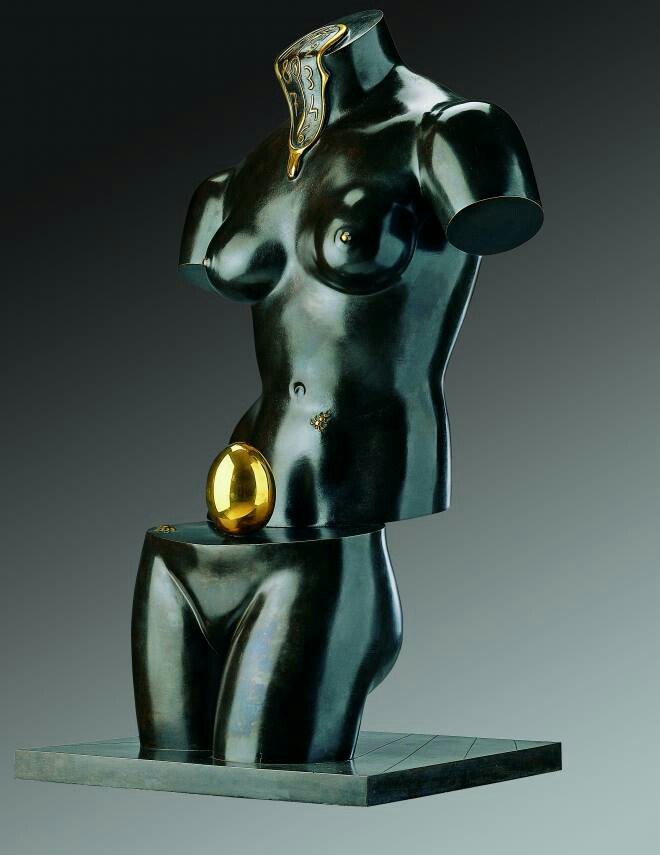
Space Venus by Salvador Dali

Space Venus by Salvador Dali

I know little about art and art history. But I feel this sculpture, and I’m learning more. My speculation, discovery and thoughts:
Read the rest of this entry »

A woman, big-with-child, sat patiently at the curb in a stiff wooden chair. She sat in the hot sunshine watching the life on the street and guarding within herself, her own mystery of life.

Francie remembered her surprise that time when mama told her that Jesus was a Jew. Francie had thought that he was a Catholic. But mama knew. Mama said that the Jews had never looked on Jesus as anything but a troublesome Yiddish boy who would not work at the carpentry trade, marry, settle down and raise a family. And the Jews believed that their Messiah was yet to come, mama said. Thinking of this, Francie stared at the Pregnant Jewess.

“I guess that’s why the Jews have so many babies,” Francie thought. “And why they sit so quiet…waiting. And why they aren’t ashamed the way they are fat. Each one thinks that she might be making the real little Jesus. That’s why they walk so proud when they’re that way. Now the Irish women always looked so ashamed. They know that they can never make a Jesus. It will be just another Mick. When I grow up and know that I am going to have a baby, I will remember to walk proud and slow even though I am not a Jew.”

Read the rest of this entry »